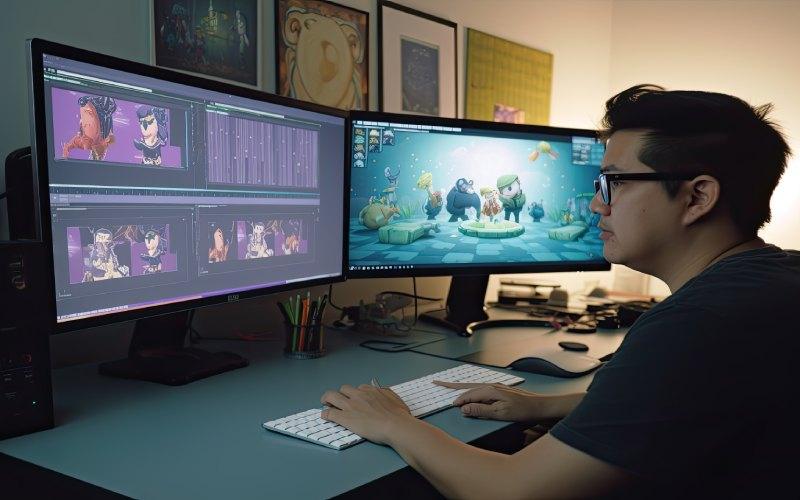
There was a time, not too long ago, when the magic of cinema was a guarded secret, tucked away in high-budget studios in Hollywood or Mumbai. Today, that “magic” is the pulse of our digital world. Whether you are scrolling through a social media feed, exploring a virtual reality environment, or watching a blockbuster on an OTT platform, the invisible hand of a visual effects artist is everywhere.
If you find yourself watching a film and wondering how a digital creature felt so “alive,” or how a completely virtual city looked indistinguishable from reality, you aren’t just a fan—you are a potential creator. At ISMT Business School, we see this curiosity as the foundation of a career. But in 2026, the industry is no longer just about knowing how to use software; it is about mastering the art of the “animation VFX course”
The 2026 Shift: From Passive Viewing to Immersive Reality
The demand for a professional animation VFX course has shifted. We are moving away from traditional 2D workflows toward real-time rendering and interactive environments. Why does this matter for a student today? Because the tools you learn now must prepare you for a world where the lines between gaming, film, and live events have completely blurred.
Studios are now looking for “T-shaped” professionals—individuals who have a deep specialization in one area (like lighting or rigging) but possess a broad understanding of the entire production pipeline. This holistic approach is exactly what we cultivate at ISMT.
Beyond the Screen: Where Can a VFX Career Take You?
While the film industry remains a titan, the “hidden” markets for animation and VFX are expanding at an unprecedented rate:
- The Rise of Virtual Production: Gone are the days of just “green screens.” Using LED volumes and real-time engines, filmmakers can now see their digital backgrounds while they shoot. This requires a new breed of artist who can build assets that look perfect from every camera angle.
- Architectural and Medical Visualization: Real estate developers now use VR to “walk” clients through buildings that haven’t been built yet. Surgeons use 3D medical animation to plan complex procedures. These high-paying niches offer stability beyond the entertainment sector.
- The E-Commerce Revolution: Product posters are no longer just photos. They are 3D renders that can be rotated, customized, and animated. Brands are desperate for artists who can turn a static product into a digital experience.
Why Foundation Still Beats Technology
In a world obsessed with new tools, it is easy to forget that the best VFX artists are, first and foremost, observers of life. An expert content creator knows that software will change every three years, but the principles of physics, the behavior of light, and the psychology of movement are eternal.
Our curriculum at ISMT doesn’t just teach you which buttons to click in Maya or Houdini. We teach you how a flame flickers, how a shadow falls across different textures, and how to tell a story without a single word of dialogue. This “human-centric” design is what prevents your work from looking “robotic” and ensures it resonates with an audience.
Navigating the Learning Curve: What to Expect
Choosing an animation vfx course is an investment of time and creative energy. At ISMT, we focus on a “Studio-Ready” methodology. This means your classroom functions like a production house. You will face deadlines, work in collaborative teams, and learn the “invisible” skills of version control and file management—the very things that make or break a professional career in a high-pressure studio environment.
Frequently Asked Questions
1. Is the animation and VFX industry in India future-proof?
2. Can I start a career in VFX if I don't know how to draw?
3. What is the average starting salary after an animation VFX course?
4. How long does it take to build a professional portfolio?
5. Does an ISMT diploma cover real-time engines like Unreal Engine?
Editorial & Research Policy
This content was developed through a rigorous analysis of 2026 industry trends, job market data from leading VFX houses, and educational benchmarks. We adhere to a “Verified Insight” policy, ensuring that all career projections and technical descriptions reflect current studio realities. Our goal is to provide transparent, fluff-free guidance for aspiring creators.